
Keywords: fairy books for kids, children’s books mental health, picture books for anxious children, benefits of reading aloud
If your child has a favorite fairy story they ask for night after night — the one where they already know what happens and ask for it anyway — you’ve witnessed something more powerful than a bedtime routine. You’ve witnessed a child self-regulating.
Research in developmental psychology has long established that storytelling plays a central role in how children process emotion. And fairy tales, with their clear moral landscapes, magical problem-solving, and ultimately safe endings, are particularly effective at supporting children’s mental health in the early years.
Here’s what the research says — and what it means for the books you choose to read tonight.
What Does the Research Say About Picture Books and Children’s Wellbeing?
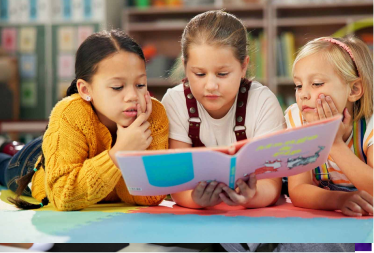
A 2023 study published in the journal Early Childhood Education found that children who were regularly read to during ages 3 to 6 showed measurably lower anxiety markers and greater emotional vocabulary than those who were not. The mechanism is straightforward: stories give children a safe container for big feelings.
When a child hears that Laura the fairy was scared and lost and still found her way home, they don’t just hear a story. They rehearse an emotional experience — fear, uncertainty, resolution, relief — without any real-world risk. Psychologists call this ‘narrative processing,’ and it is one of the most powerful tools young children have for building emotional resilience.
Fairy tales specifically have been the subject of child development research for decades, with scholars noting that the fairy-tale structure — a character in trouble, help arriving from unexpected sources, a safe return home — mirrors the emotional needs of children ages 3 to 8 almost exactly.
5 Ways Fairy Picture Books Support Your Child’s Emotional Health
- They normalize fear. When a character is scared and survives it, children learn that their own fears are survivable too.
- They model help-seeking. Books like Little Lost Laura show children that asking for help — from a toad, a tree, a raven — is brave, not weak.
- They build emotional vocabulary. Words like ‘worried,’ ‘relieved,’ ‘brave,’ and ‘grateful’ appear naturally in fairy stories and expand children’s ability to name their own feelings.
- They create predictable comfort. Children who are anxious are soothed by repetition. A beloved book read again and again is a form of emotional anchor.
- They teach that the natural world is safe. Nature-based fairy tales, like those in the Buttercup Wren collection, create a sense of connection to the living world — trees, birds, ponds — as sources of warmth and protection rather than threat.
Which Fairy Books Are Best for Supporting Children’s Emotional Wellbeing?
Not all fairy books are created equal for this purpose. The most effective titles for supporting children’s mental health tend to share a few qualities:
- The central character experiences a real, relatable problem — not an abstract one
- Help comes from community, not magic alone — modeling real-world social connection
- The resolution is warm and earned, not sudden or arbitrary
- The illustrations are expressive and emotionally rich
All three books in the Raindrop Production collection by Buttercup Wren meet these criteria. In Little Lost Laura, a small fairy gets lost and frightened — and is brought home through the kindness of every creature she meets. In The Big Symphony, a frog loses his voice before the most important performance of his life and learns that his community will carry him when he cannot stand on his own. In Bella the Buttercup Beach Fairy, a fairy’s act of quiet, consistent care for sea turtle nests teaches children that showing up for others — day after day — is its own kind of magic.
Practical Tip: How to Make the Most of Read-Aloud Time
Simply reading is powerful. But if you want to amplify the emotional benefit:
- Pause and ask: ‘How do you think Laura felt when she couldn’t find her way home?’
- Relate it: ‘Have you ever felt a little lost or scared? What helped you feel better?’
- Celebrate the ending: ‘She found her way home — and look who helped her!’
These conversations, brief as they may be, help children bridge the emotional world of the story to their own experience — which is precisely where the developmental benefit lives.
FAQ: Fairy Books and Children’s Mental Health
Q: Are fairy tales appropriate for anxious children, or will they make anxiety worse?
A: Research consistently shows that fairy tales — particularly those with clear, warm resolutions — do not increase anxiety in young children. They reduce it. The key is choosing stories where the child character is ultimately safe and surrounded by community. Little Lost Laura is an excellent choice for anxious children specifically.
Q: At what age should children start hearing fairy tales?
A: Most child development experts suggest that fairy tales are appropriate from age 2 or 3 onward, with picture-book versions being ideal for the 3–8 age range. Simpler, nature-based fairy stories with bright illustrations are best for toddlers.
Q: How often should I read to my child for mental health benefits?
A: Even 15 minutes of daily read-aloud time shows measurable developmental benefits. Consistency matters more than duration.
Q: What makes a fairy book good versus one that might be overstimulating or scary?
A: Look for books where: (1) the scary moment is brief and the resolution is warm, (2) the illustrations are inviting rather than dark or chaotic, and (3) the character finds real help from friends, family, or nature rather than being rescued by random magic.

